
Every project has a story. Just like every room has a sound of its own.
A room's acoustics can make an enormous difference in how we experience it — whether we're recording music, playing an instrument, working with clients, or simply trying to hear ourselves think.
There's no single acoustic solution that works for every space. A mixing studio needs accuracy and consistency. A room for playing drums needs energy and life. A therapy office calls for clarity, comfort, and discretion.
At Third Act Acoustics, the starting point is always the same: understanding what happens in a room, what happens because of the room, and what we'd like to happen differently.
Below are some examples of what that looks like.
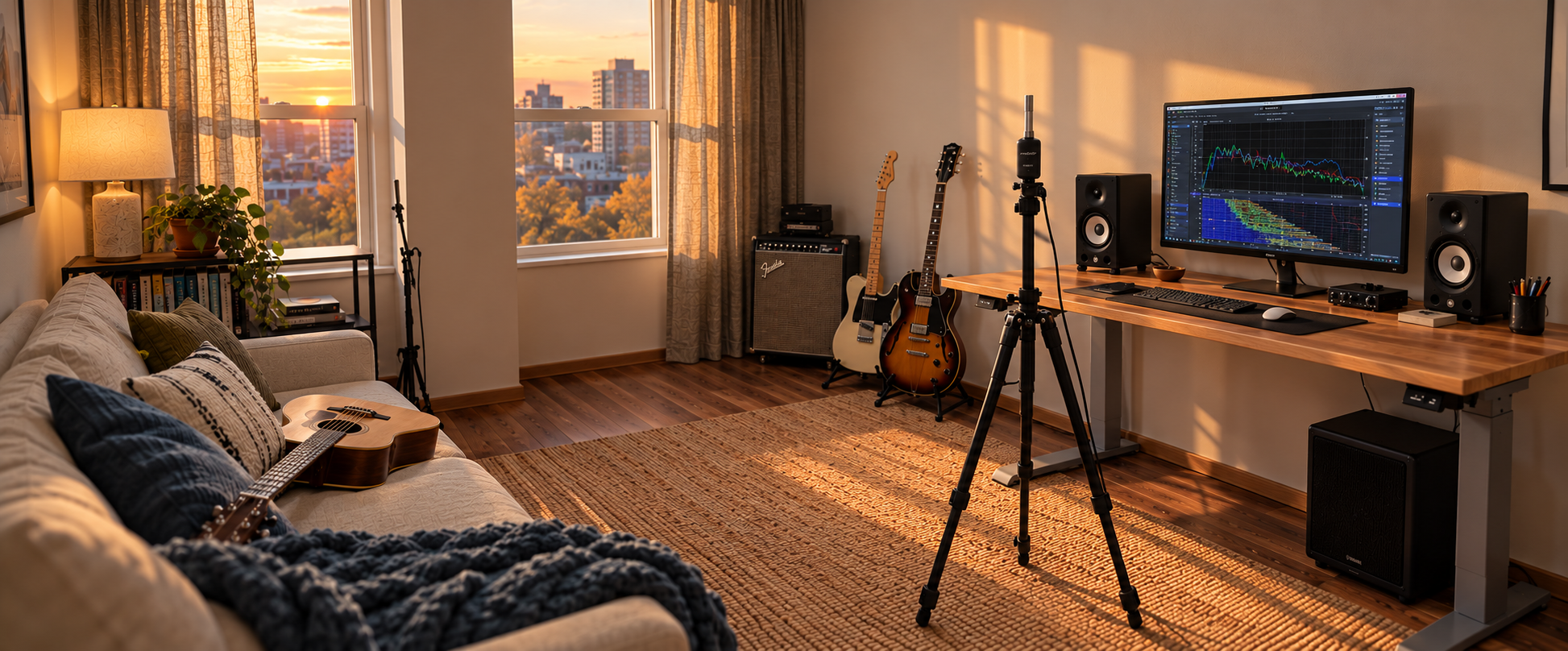
The Arterie — Mixing Studio
Burlington, Ontario, 2024
Making a room tell the truth.
A mixing studio has a particular responsibility: to let the person behind the console hear what's actually happening in the music.
Unfortunately, untreated rooms have opinions of their own. Certain bass frequencies accumulate, others disappear, and reflections from walls and ceilings can colour what comes out of the monitors. Decisions that sound right in one room may not translate well to another.
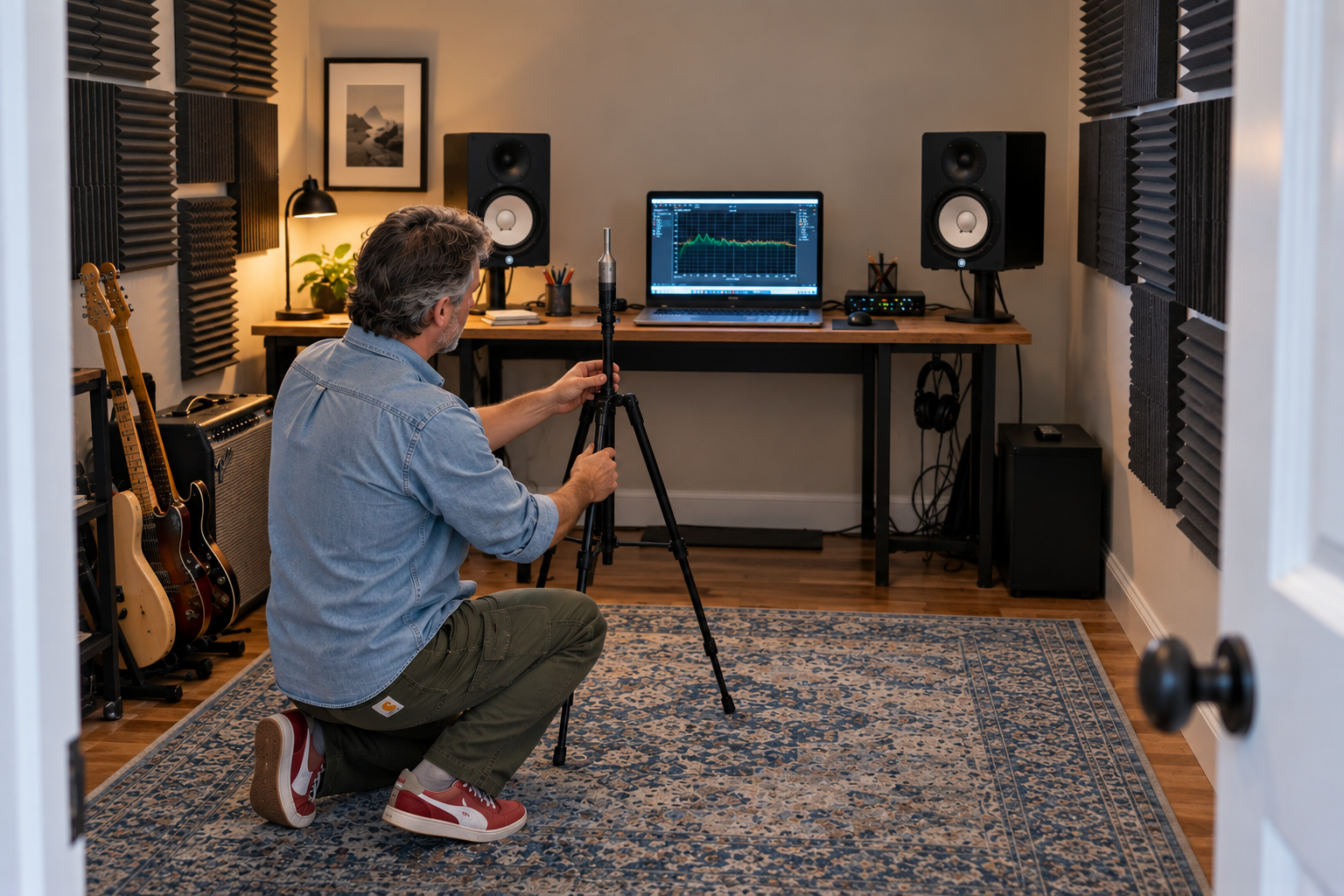
The mixing room at The Arterie — a creative space within a group psychotherapy and psychology practice — was designed around a fundamental objective: achieving a balanced, accurate listening environment with a frequency response as flat and consistent as practical.
A combination of broadband absorption panels, corner bass traps, and overhead ceiling treatment helps control unwanted reflections and low-frequency resonances.
The goal isn't to make the room completely dead. It's to make the room trustworthy.
When the acoustics stop misleading you, you can concentrate on the music.
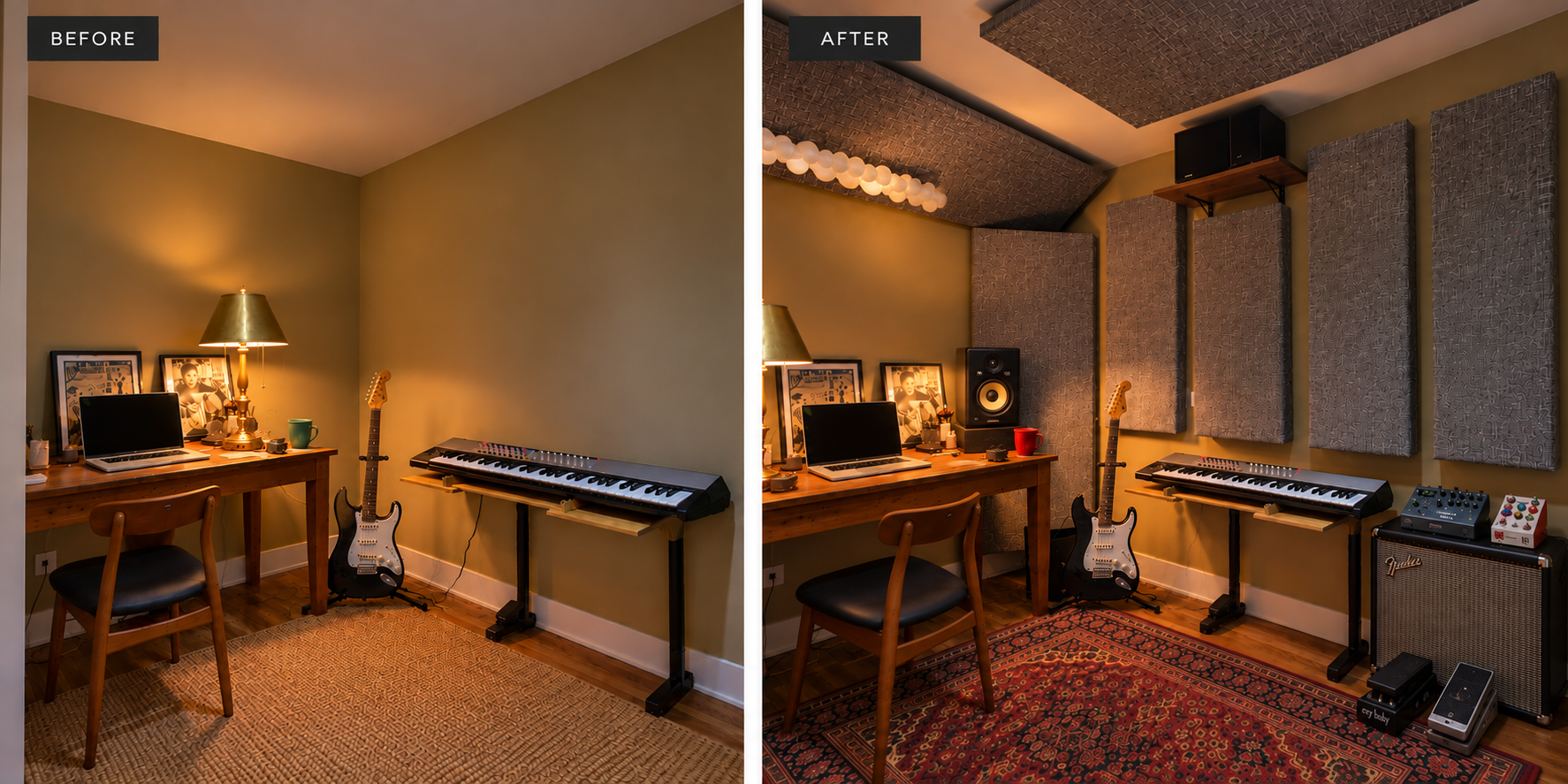
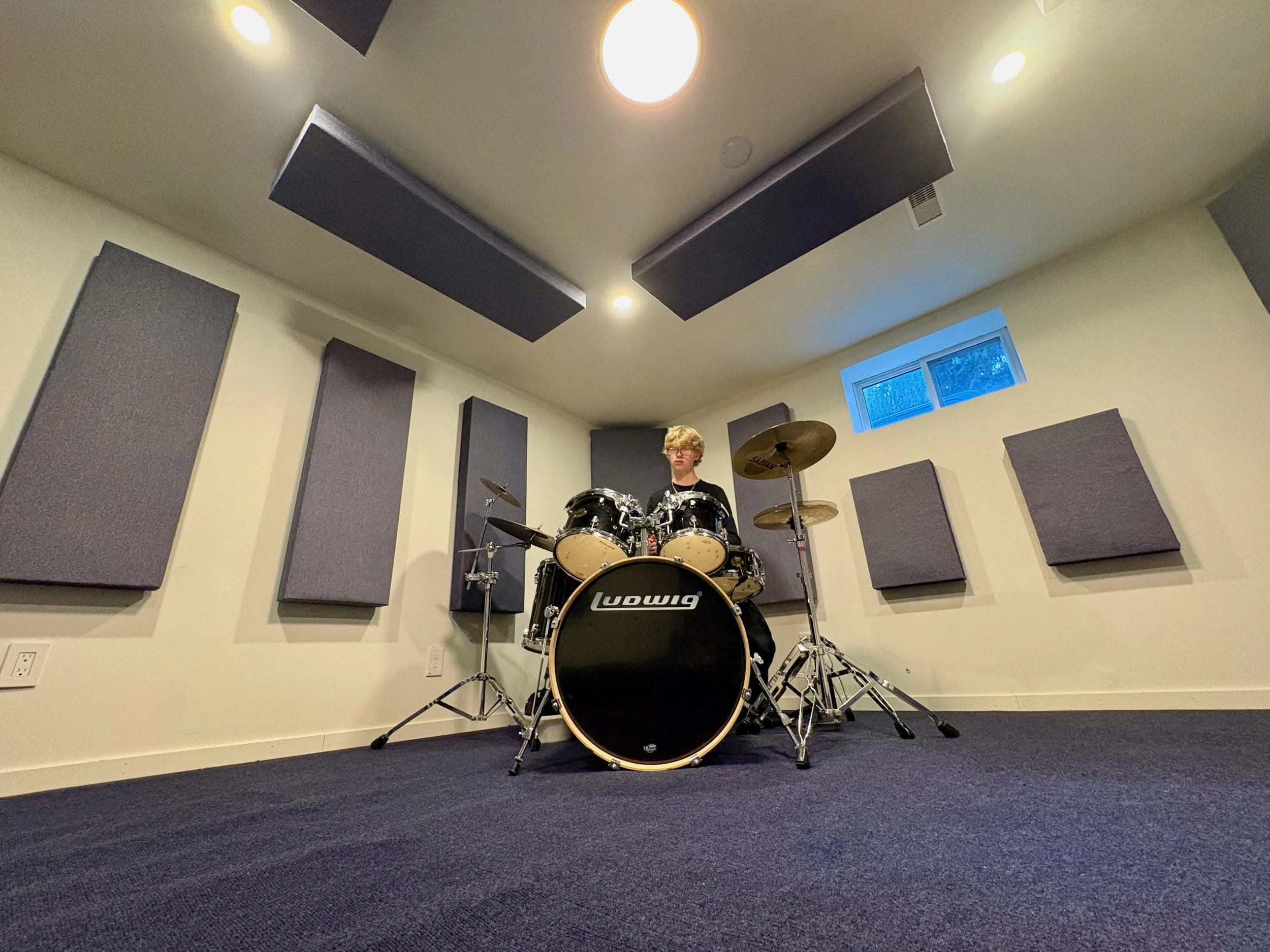
The Live Room - Drumming Studio
Dundas, Ontario, 2026
Loving the energy. Losing the chaos.
An acoustic drum kit is a wonderful thing. It's also an extraordinary generator of sound energy, from the deep thump of the kick drum to the crack of a snare and the shimmering complexity of cymbals.
Put that kit in a small, untreated room — and into the hands of your sixteen-year-old son — and things can get overwhelming very quickly.
This basement studio was built to provide a dedicated space for playing, practising, and recording acoustic drums. But unlike a critical listening room, the goal here wasn't to eliminate as much reverberation as possible.
Because a drum room should still feel alive.
The challenge was to tame the room's strongest resonances, reduce harsh reflections, and create a more balanced, comfortable acoustic environment without sacrificing the natural excitement of the instrument.
Custom-built broadband absorption panels, corner bass traps, and ceiling cloud treatments provide control where it's needed while preserving a sense of space.
This is acoustic treatment, not soundproofing. The intention is to improve how the room sounds inside, rather than prevent all sound from travelling outside it.
The result we're working toward is a room where the drums can speak clearly — and the player and his friends can enjoy listening.
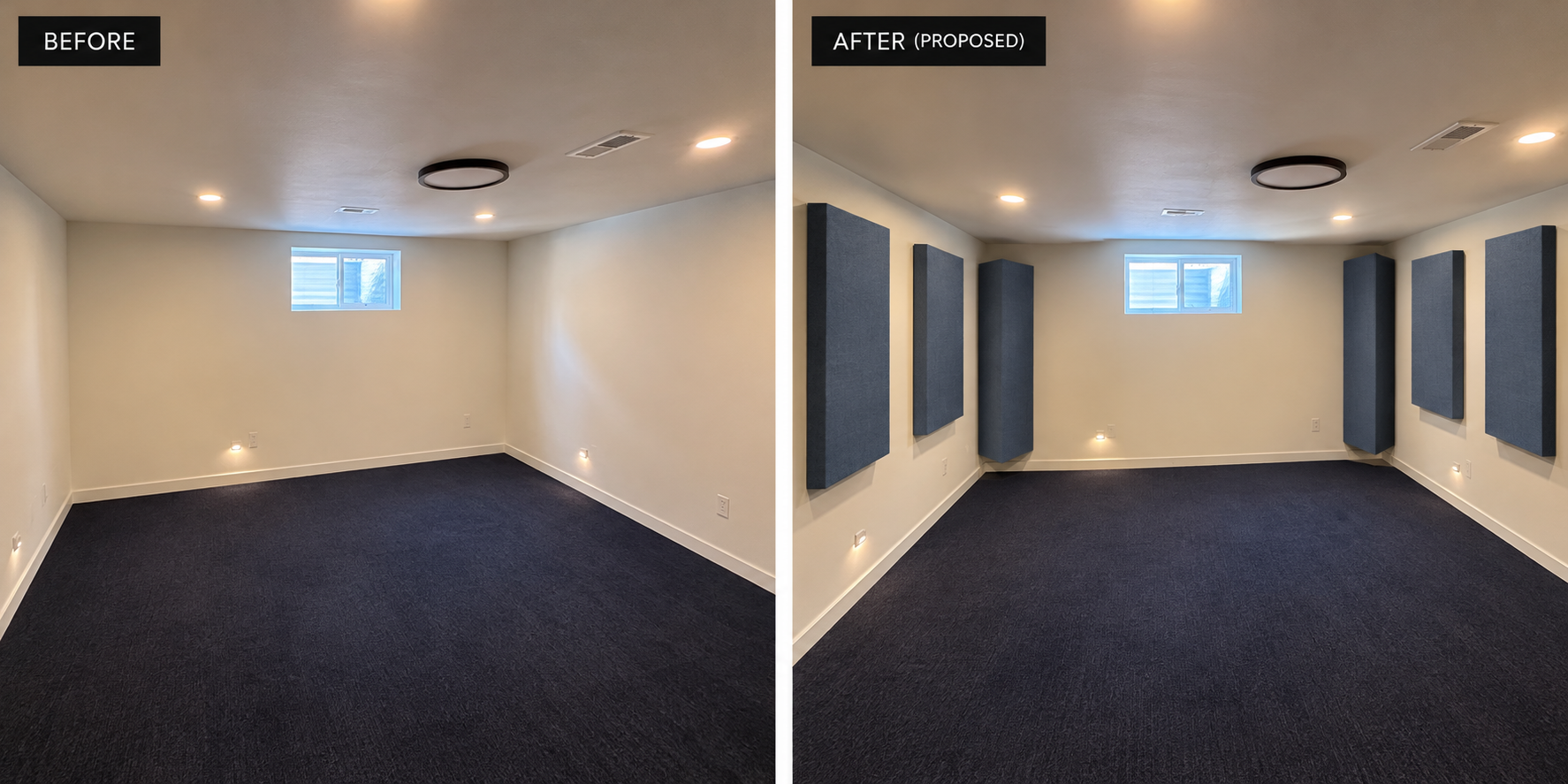
Other Rooms. Other Possibilities. Can You Imagine?
Of course, acoustic treatment isn't just for recording studios. Many of the spaces we use every day have acoustic challenges that can be addressed with relatively modest, thoughtfully designed interventions.
A little less room in the conversation, please?
You're on a video call. Your voice echoes off the walls, the room sounds hollow, and the microphone seems to pick up everything except what you want it to.
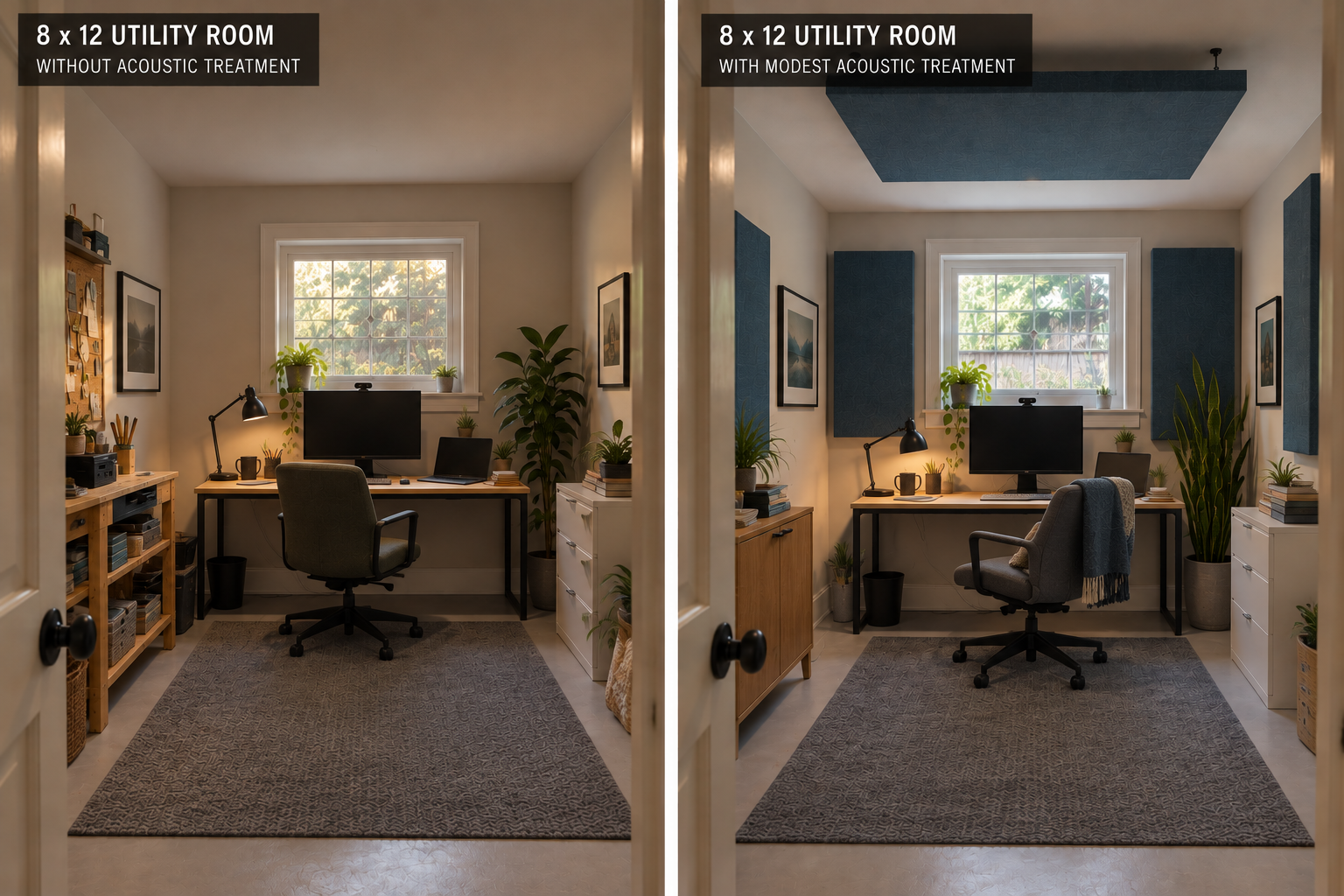
Hard surfaces, bare walls, and sparse furnishings can make even a small home office sound surprisingly unpleasant.
A few carefully positioned acoustic panels can reduce harsh reflections, improve speech clarity, and create a more comfortable environment for long conversations and online meetings.
The room doesn't need to look like a recording studio. In fact, it shouldn't. Acoustic treatment can be designed to complement the furniture, colours, and character of a working space.
The Home Office
The Therapy or Counselling Office
Making room for confidential conversations.
Some conversations deserve a room that knows how to listen.
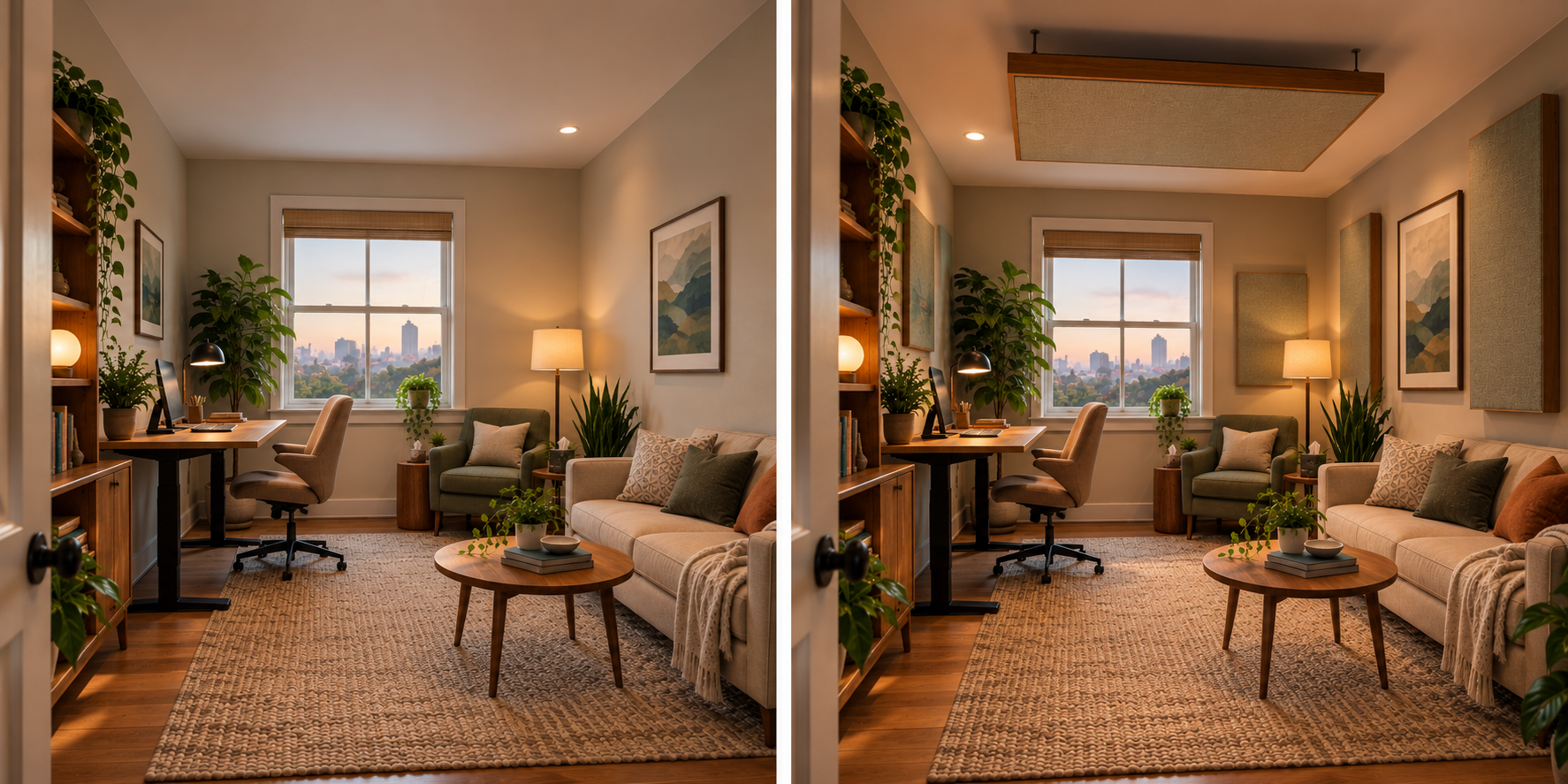
In a counselling or therapy office, acoustics contribute to comfort, concentration, and a sense of ease. Excessive reverberation can make voices sound harsh or indistinct, particularly in rooms with hard floors, large windows, and minimal furnishings.
Thoughtfully placed acoustic treatment can soften those reflections, improve speech intelligibility, and make the space feel calmer and more welcoming.
Where confidentiality is a concern, it's important to distinguish between improving the acoustics within a room and limiting sound transmission between rooms. Those are different challenges, sometimes requiring different solutions.
The aim is a space that supports the conversation without calling attention to itself.
The Podcasting or Voiceover Room
Let your voice be the voice.
A good microphone captures more than the person speaking into it. It also captures the room.
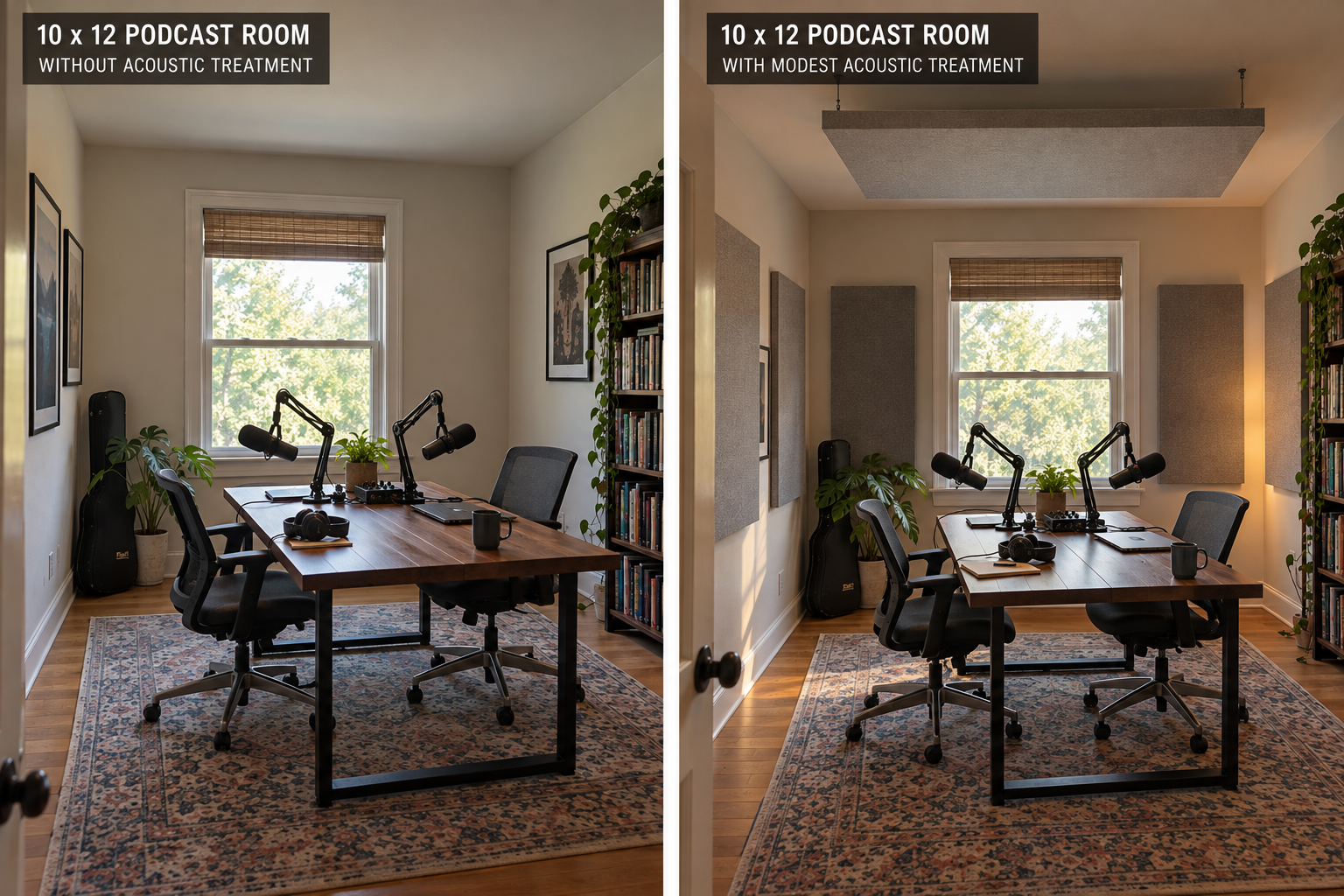
Flutter echoes, boxy resonances, and hard reflections can make even excellent recording equipment sound disappointing.
Fortunately, spoken-word recording often benefits enormously from a small number of well-placed broadband absorbers, particularly around the microphone and speaking position.
The objective is a clear, natural, intimate recording — one that requires less corrective processing afterward and lets the speaker's personality come through.
A room where every voice can be heard.
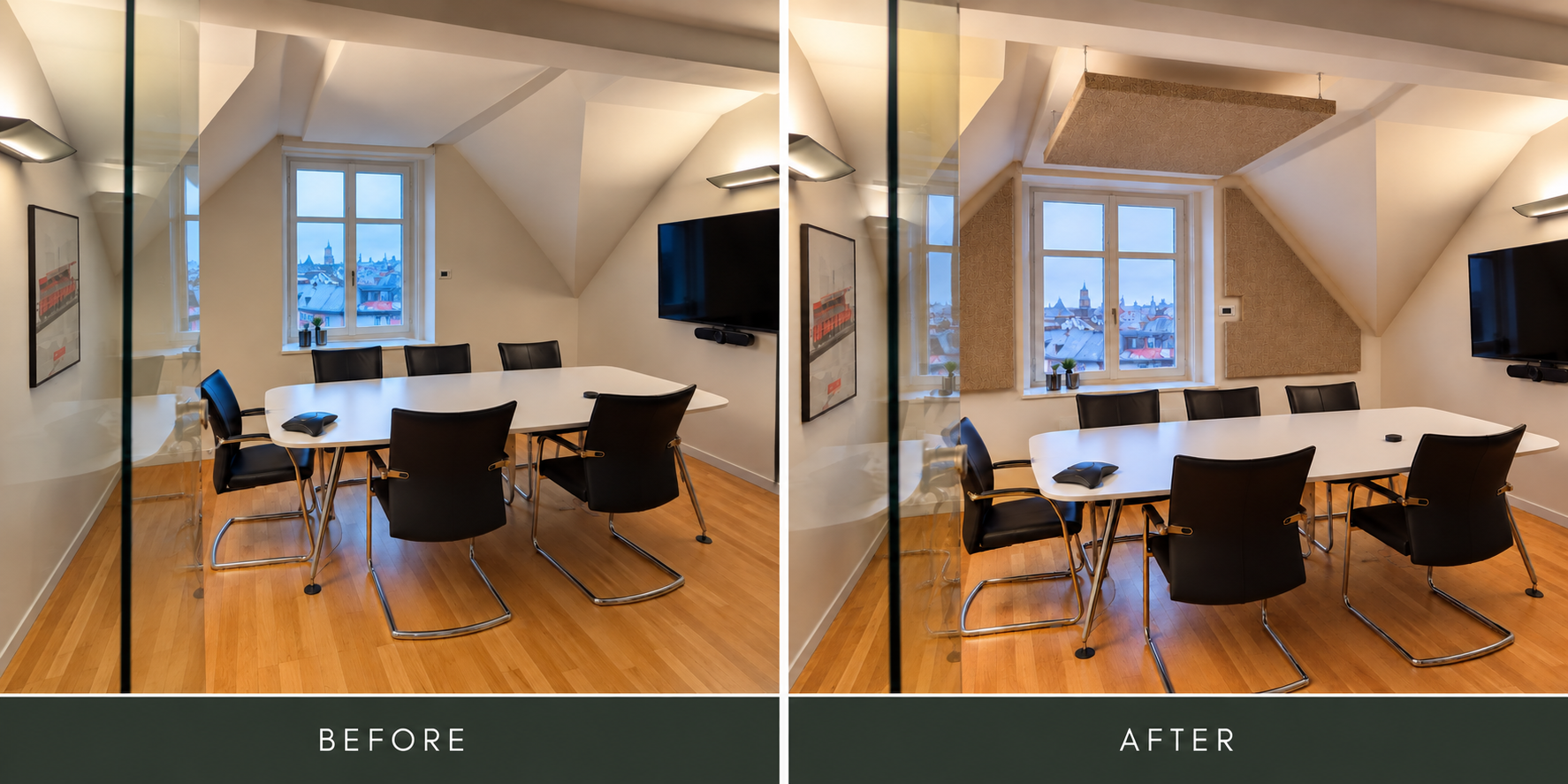
Conference rooms are meant to bring people together. But hard surfaces, large tables, and parallel walls can make even a small meeting surprisingly difficult — and often tiring — to follow.
Voices overlap. Words become indistinct. Participants on video calls struggle to hear what's being said, while those in the room find themselves speaking louder just to be understood.
Good acoustic treatment helps bring clarity to the conversation without making the room feel unnaturally quiet.
The goal is a comfortable, balanced environment where people can communicate easily, whether they're sitting across the table or joining from halfway around the world.
The Conference Room
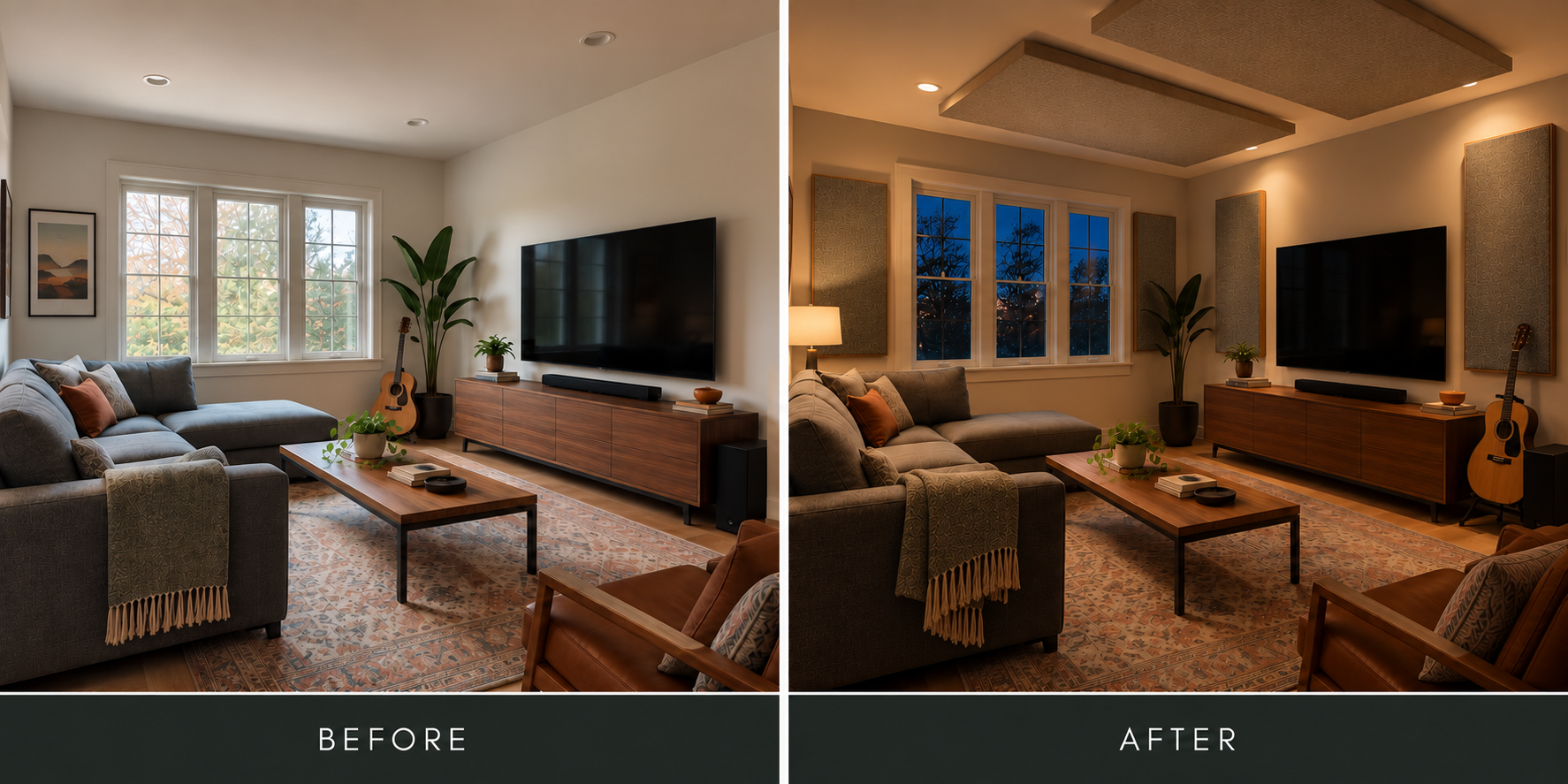
The Home Entertainment Room
Hear more of what you love.
A favourite recording, a carefully assembled hi-fi system, or a great film soundtrack deserves a room that lets it shine.
Unfortunately, even expensive speakers can't overcome every acoustic problem. Low frequencies can become exaggerated or uneven, while reflections obscure detail and stereo imaging.
Bass trapping, broadband absorption, and thoughtful placement can help create a more balanced listening experience.
Sometimes the most effective upgrade isn't another piece of equipment.
It's the room itself.
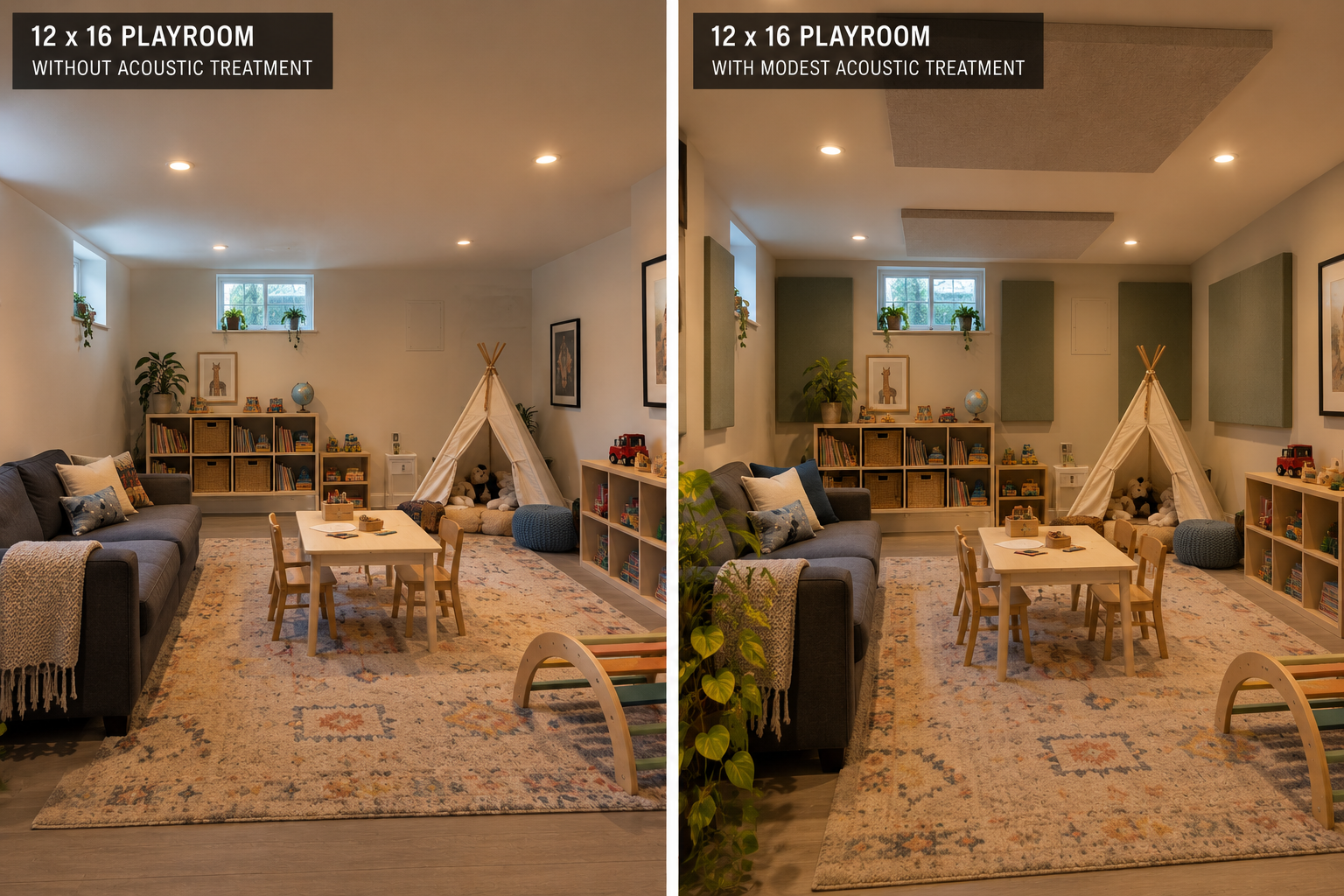
Room to play. Room to be rambunctious.
Children's playrooms are lively places. Toys tumble, voices rise, music plays, and imaginations run wild. That's exactly as it should be.
But in a basement or multipurpose room with hard floors, bare walls, and low ceilings, all that wonderful activity can quickly become overwhelming.
Sound reflects from surface to surface, building into a noisy, tiring environment for children and adults alike.
Thoughtful acoustic treatment can soften those reflections and make the room more comfortable without taking away its energy.
The aim isn't to silence the fun. It's to create a space where children can play freely, and everyone can enjoy being there.
The Children’s Playroom
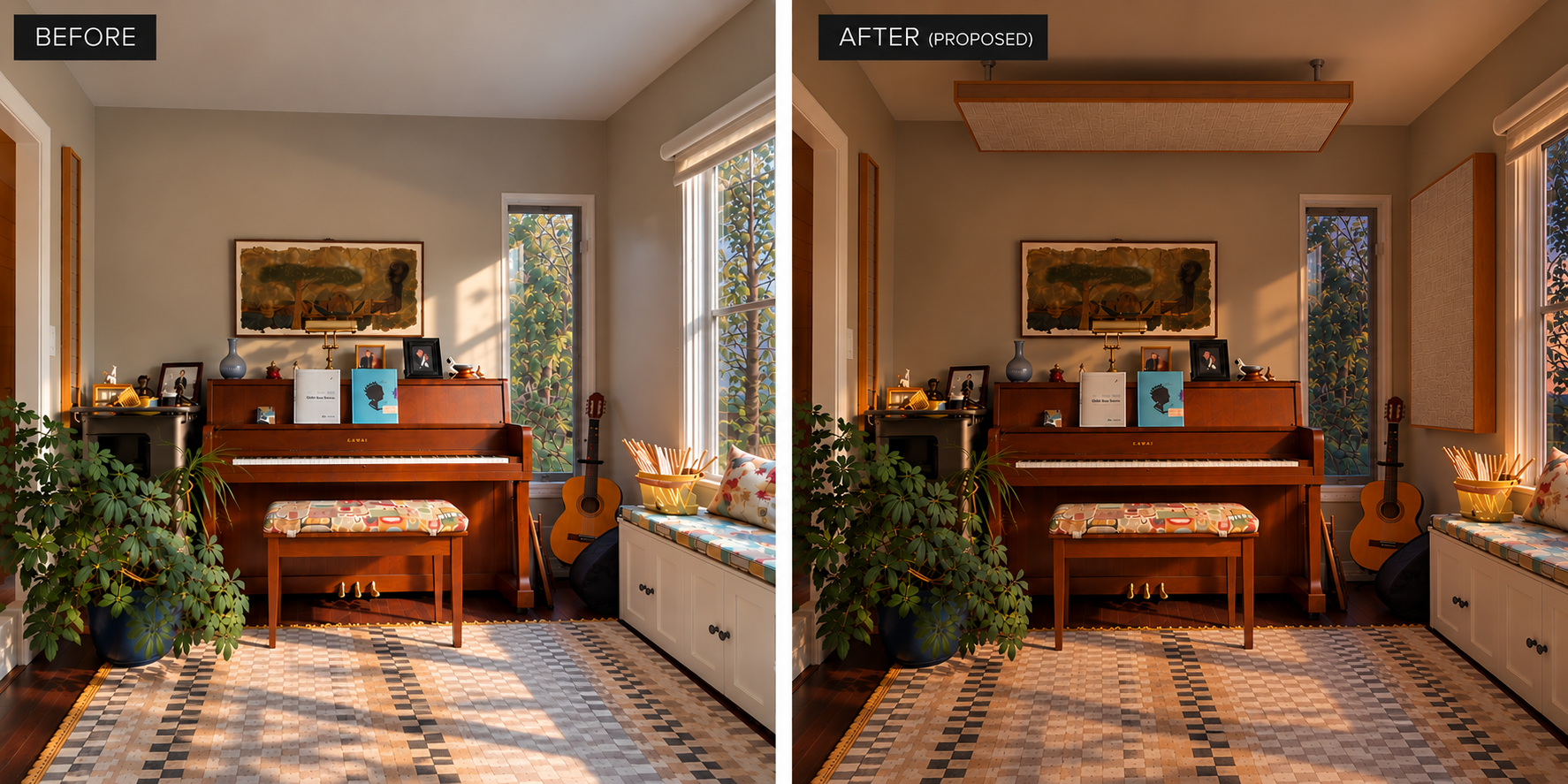
The Music Practice/Teaching Room
A better place to rehearse.
Whether it's a guitar, piano, saxophone, or a small ensemble, playing music in an untreated room can be tiring.
Some notes boom. Others disappear. Reflections bounce between parallel walls, and the overall sound becomes muddled or harsh.
But musical spaces need character. The objective isn't necessarily to remove every reflection or eliminate reverberation.
It's to find a balance between control and liveliness, so that instruments sound natural and playing remains enjoyable.
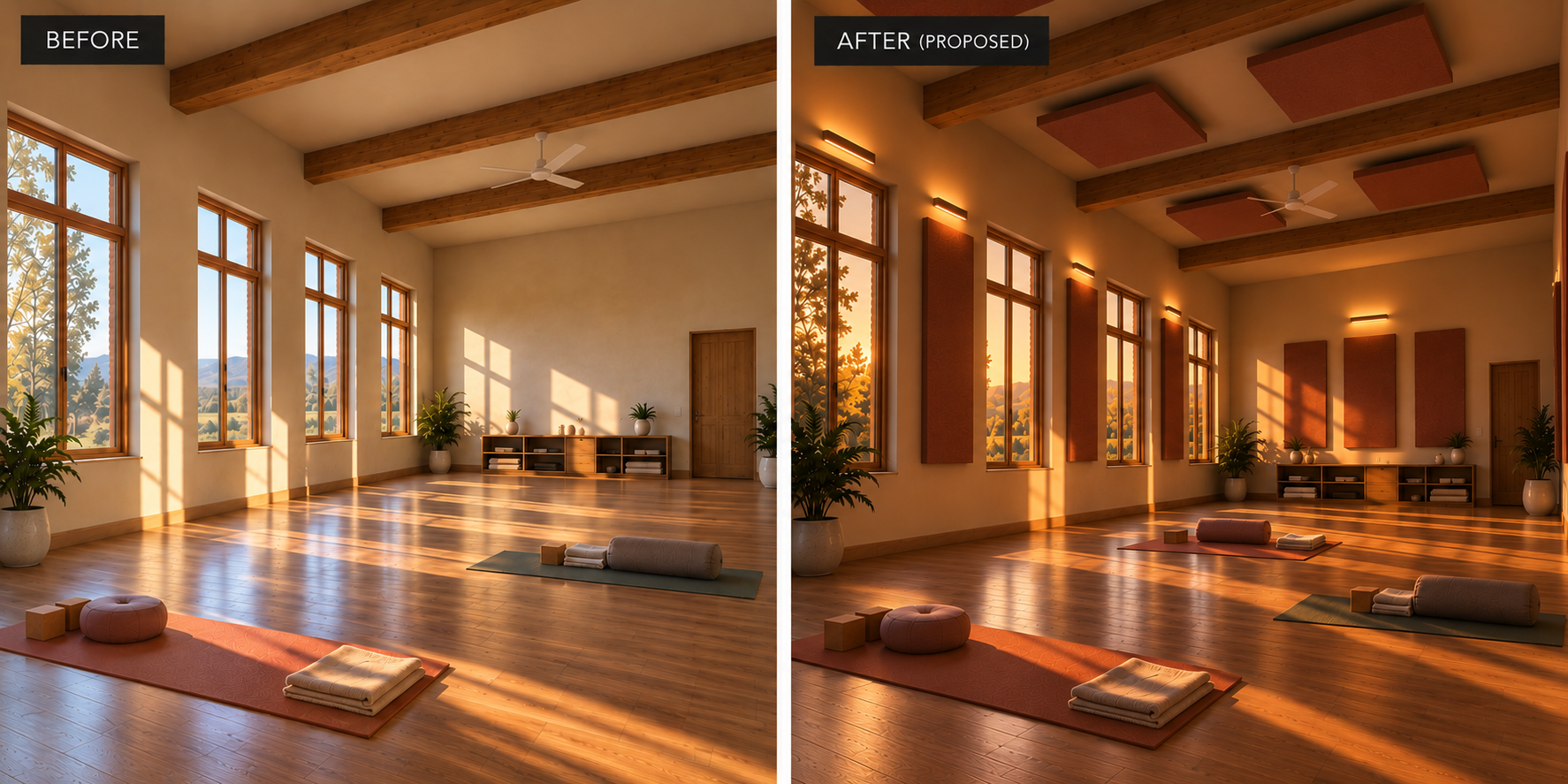
The Yoga or Wellness Studio
A quieter space to find your balance.
In a yoga, meditation, or wellness studio, the way a room sounds can be just as important as the way it looks or feels.
Hard surfaces can create distracting echoes. An instructor's voice may become indistinct, soft music can lose its warmth, and even small sounds can seem unexpectedly intrusive.
Yet complete silence isn't necessarily the objective. A welcoming wellness space should feel natural, peaceful, and gently alive.
Carefully placed acoustic treatment can reduce unwanted reflections, improve speech clarity, and create a more balanced listening environment.
The result is a room that supports concentration, relaxation, and a deeper sense of presence.
What Could Your Room Become?
Tell us about your room. We'll figure out what it needs.
You don't need to know anything about the science of acoustics to recognize that something in your room isn't quite right.
Perhaps conversations are difficult to follow. Perhaps your recordings sound muddy. Perhaps your speakers sound wonderful in the showroom but disappointing at home.
Or perhaps you simply know that the room could feel better.
That's a perfectly good place to begin.
“What we're talking about when you perform music is you're talking about sculptured air.”
— Frank Zappa